Hey everyone! It feels like just yesterday we were talking about simple recycling, and now the conversation around our planet’s health has truly exploded, hasn’t it?
I’ve personally seen and felt the shifts in our local environment, from unpredictable weather patterns right here in my backyard to news about distant ecosystems struggling.
It’s easy to get overwhelmed by headlines about climate change, biodiversity loss, and persistent pollution, but what if we started looking at the bigger picture – the incredible, intricate dance of environmental ecosystems that sustain all life?
Honestly, for a long time, I thought some of these massive, global issues were out of my hands, too overwhelming for an individual to tackle. But after diving deep into how everything connects, from the tiniest microbe in the soil to the vast, mysterious oceans, I realized just how much impact our collective and individual actions truly have.
It’s not just about endangered species in faraway lands anymore; it’s about the very air we breathe, the water we drink, and the food we eat, right here, right now.
Understanding these delicate balances isn’t just for scientists; it’s for all of us who want a healthier, more vibrant future for ourselves and generations to come.
We’re talking about everything from the vital role of urban green spaces in our cities to global initiatives tackling deforestation and plastic waste, and how these systems are adapting – or struggling to adapt – to a rapidly changing world.
Let’s peel back the layers and truly understand the fascinating world of environmental ecosystems together.
Unraveling the Interconnected Web of Life
The Invisible Orchestrators: Microbes and Soil Health
It’s truly incredible when you start digging into the unseen world beneath our feet. I mean, for years, I just thought soil was, well, dirt! But after reading up and even trying my hand at a small backyard garden, I’ve realized it’s a bustling metropolis of life.
Billions of microorganisms – bacteria, fungi, tiny invertebrates – are constantly working, breaking down organic matter, cycling nutrients, and essentially creating the very foundation for all terrestrial life.
When I first learned about the sheer complexity, it blew my mind. Think about it: every apple you eat, every tree you see, every blade of grass, relies on this intricate dance happening invisibly.
When we disturb this delicate balance, say, through heavy pesticide use or intensive farming that depletes the soil, we’re not just affecting the plants, we’re undermining the entire system that feeds us.
I’ve personally experimented with composting and saw firsthand how it transformed my sad, hard-packed soil into rich, dark earth teeming with life. It’s a small example, but it really hammered home just how vital these tiny “orchestrators” are.
Losing them means losing the very building blocks of our food systems and natural landscapes. It makes you pause and think about every step we take on the ground, doesn’t it?
From Local Ponds to Global Currents: Water’s Vital Role
Water. It seems so simple, right? It falls from the sky, flows in rivers, and fills our oceans.
But the way water moves through our ecosystems is nothing short of magical, and frankly, absolutely critical to everything. I remember as a kid, I’d spend hours by a local stream, mesmerized by the dragonflies and tiny fish.
That stream wasn’t just a pretty place; it was a living artery, connecting the forest, filtering runoff, and eventually feeding into a larger river system.
Fast forward to today, and I’m constantly thinking about the journey of water – from a raindrop landing on a mountain to eventually becoming part of the vast ocean currents.
These currents, by the way, are literal planet-wide conveyors, distributing heat, nutrients, and even influencing global weather patterns. The sheer scale is dizzying!
What I’ve seen, though, is how easily we disrupt this flow. Pollution from our homes and industries often finds its way into these waterways, turning vibrant habitats into struggling ones.
And let’s not even start on how crucial freshwater access is for communities globally, and how climate change is messing with precipitation patterns, leading to both droughts and floods.
It’s a constant reminder that every drop truly counts, and protecting our water systems, whether a small pond or the mighty ocean, is non-negotiable for life as we know it.
Our Urban Oases: Green Spaces and Their Unexpected Power
Beyond Pretty Parks: Ecosystem Services in Cities
When I moved to a bigger city years ago, I honestly thought I was leaving most of “nature” behind. Boy, was I wrong! I quickly learned that even in the concrete jungle, green spaces – from tiny community gardens to expansive city parks – aren’t just for aesthetics or weekend picnics.
They’re actually providing crucial “ecosystem services” that make city life not just tolerable, but possible. I’ve personally felt the difference on a scorching summer day walking through a tree-lined street versus a barren one; the temperature drop is astonishing!
Trees act like natural air conditioners, reducing the urban heat island effect, which, let me tell you, is a real blessing. Beyond that, they’re filtering pollutants from the air we breathe, absorbing rainwater to reduce flooding, and even boosting our mental well-being just by being there.
It’s not just about what we can see, either. The soil beneath these parks is still doing its vital work, and the plants are supporting local insect life, even if it’s just a few determined bees.
It made me realize that even in the densest urban areas, we’re still fundamentally connected to these natural systems, and investing in them is investing in our own health and comfort.
The Buzz of the City: Supporting Urban Wildlife
You might think wildlife in the city is limited to pigeons and the occasional squirrel, but if you look closely, you’ll be amazed. I remember once spotting a vibrant monarch butterfly fluttering around a small patch of wildflowers in a busy downtown area.
It wasn’t a huge nature preserve, just a little corner that someone had decided to plant with native species. It was such a stark, beautiful reminder that life finds a way, and that even a small effort can make a huge difference.
Urban green spaces become vital corridors and habitats for a surprising array of creatures, from songbirds and beneficial insects to even small mammals.
These creatures aren’t just “cute”; they play important roles, like pollinating the very plants that clean our air and beautify our surroundings, or controlling pest populations.
What I’ve personally observed is that when communities embrace initiatives like planting native gardens, creating pollinator pathways, or simply letting a corner of a park grow a little wild, the biodiversity quickly responds.
It’s like rolling out the welcome mat for nature, and in return, our cities feel more alive, more vibrant, and healthier for all of us.
Deep Dives into the Blue: The Ocean’s Critical Role
The Silent Giants: Coral Reefs and Their Biodiversity
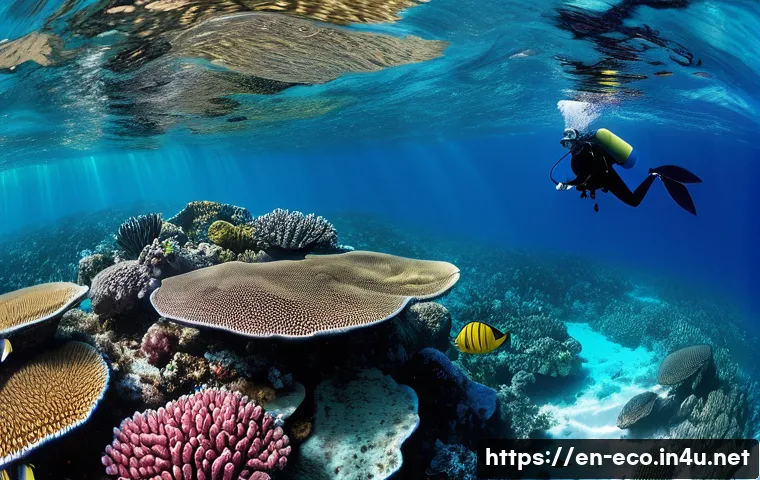
Whenever I think about the ocean, my mind inevitably drifts to coral reefs. These aren’t just pretty underwater gardens, they’re bustling metropolises, supporting an incredible quarter of all marine species, even though they cover less than 1% of the ocean floor.
I’ve been lucky enough to snorkel over a small reef system once, and the sheer vibrancy, the kaleidoscope of colors, and the constant movement of fish was absolutely breathtaking.
It felt like an entirely different world, a testament to nature’s artistry. But beneath that beauty lies an incredibly fragile ecosystem. These “silent giants” aren’t just homes for countless creatures; they also protect coastlines from erosion and storms, and they even contribute to the air we breathe.
The sad truth is, they’re incredibly sensitive to changes in ocean temperature and acidity, both direct consequences of climate change. Learning about coral bleaching – where these vital organisms expel their colorful algae and turn ghostly white – genuinely breaks my heart.
It’s a stark visual of the immense stress our oceans are under. Preserving these incredible underwater cities isn’t just about saving beautiful fish; it’s about protecting one of Earth’s most productive and important ecosystems, a cornerstone of marine life worldwide.
Plastic Tides and Warming Waters: Threats to Marine Life
It feels like every other news story these days has something to say about plastic in the ocean, and for good reason. I’ve personally tried to cut down on single-use plastics after seeing photos and videos of marine animals tangled in debris or ingesting plastic fragments.
It’s a gut-wrenching sight, and it makes you really think about the journey of that plastic bottle after you toss it. The sheer volume of plastic entering our oceans is staggering, creating massive gyres of trash that slowly break down into microplastics, entering the food chain from the smallest plankton to the largest whales.
But plastic isn’t the only villain. Rising ocean temperatures, another consequence of climate change, are wreaking havoc on marine life in countless ways.
I’ve read about fish migrating to colder waters, disrupting delicate food webs, and acidification, which makes it harder for shellfish and corals to build their skeletons.
It’s a double whammy for our marine ecosystems. What I’ve taken away from all of this is that our actions on land, even far from the coast, have a direct and often devastating impact on the health of our oceans.
It’s not an “out of sight, out of mind” problem; it’s right here, affecting the very air we breathe and the food sources we rely on.
Breathing Life into Our Planet: Forests, Fields, and Air Quality
Guardians of the Atmosphere: The Role of Trees
Remember those elementary school lessons about trees producing oxygen? Well, it turns out they’re doing far more than just that, and on a scale that truly boggles the mind.
Forests, from the massive Amazon rainforests to the local woodland down the street, are absolute powerhouses when it comes to regulating our planet’s atmosphere.
I’ve always loved hiking in dense forests; there’s a certain crispness to the air that just feels different, and it’s not just my imagination. Trees are incredible natural filters, absorbing carbon dioxide – a major greenhouse gas – and other pollutants, then releasing that life-giving oxygen.
They also play a critical role in the water cycle, releasing moisture into the atmosphere that can influence rainfall patterns far away. Losing these “guardians of the atmosphere” to deforestation, whether for agriculture, logging, or urban expansion, isn’t just about losing beautiful scenery or wildlife habitat.
It’s like removing a vital organ from the planet. I recall seeing satellite images of deforested areas versus lush ones, and the contrast in air quality data was startling.
It really underscores that every single tree, and every forest, large or small, is pulling its weight for the collective good of our breathable air and stable climate.
Agriculture’s Balancing Act: Feeding the World Sustainably
For most of human history, agriculture has been about getting as much food as possible from the land. And for good reason – we need to eat! But what I’ve realized, especially through learning about environmental ecosystems, is that the *how* we grow our food is just as important as the *what*.
Traditional, intensive farming practices often come with a heavy ecological cost: soil degradation, excessive water use, and the runoff of fertilizers and pesticides into waterways.
I remember feeling a bit disheartened thinking about the vast scale of industrial agriculture. However, there’s a growing movement towards more sustainable farming practices that truly excites me.
Things like regenerative agriculture, which focuses on rebuilding soil health, reducing tilling, and enhancing biodiversity, are showing incredible promise.
Farmers are experimenting with cover crops, crop rotation, and integrated pest management, all of which work *with* the natural ecosystem rather than against it.
It’s a complex balancing act, trying to feed a growing global population while also protecting the very land and water resources that make food production possible.

But seeing the innovation and dedication of those working towards truly sustainable agriculture gives me a lot of hope. It demonstrates that we can indeed produce abundant food in ways that enhance, rather than deplete, our planet’s vital ecosystems.
When Ecosystems Cry Out: Understanding the Impacts of Change
The Ripple Effect: Climate Change and Habitat Loss
It’s easy to see headlines about rising global temperatures or melting ice caps and feel a disconnect, like it’s happening somewhere far away. But what I’ve personally observed, even in my own relatively stable region, is the ripple effect of these massive changes.
We’re talking about more extreme weather events – harsher storms, longer droughts, or even unexpected cold snaps that throw natural cycles completely off balance.
These aren’t just inconvenient; they decimate habitats. I’ve heard countless stories, and even seen local examples, of animal populations struggling to adapt when their traditional food sources disappear or their breeding grounds are destroyed by these erratic changes.
Think about migratory birds whose timing is now out of sync with the blossoming of flowers or the emergence of insects they rely on. Or imagine coastal communities losing land to rising sea levels, forcing species out of their homes.
This isn’t just about polar bears anymore; it’s about the delicate ecosystems right around us, struggling to keep up with the rapid pace of change. It truly makes you feel the urgency of understanding these connections, because when one part of the system falters, it rarely stays isolated.
Beyond the Headlines: Local Examples of Environmental Stress
While the global issues are huge, sometimes it’s the local examples that really hit home. I’ve seen a beloved local fishing spot struggle because of increased pollution from upstream.
The variety of fish has dwindled, and the water quality has noticeably declined over the years. It’s a stark reminder that environmental stress isn’t always about distant wildfires or remote glacier melt; it’s also about the very places we interact with daily.
Another thing I’ve noticed is the invasion of non-native species, often hitchhiking their way into new ecosystems through human activity. These invasive species can outcompete native plants and animals, throwing local biodiversity into chaos.
It feels like an ecological domino effect. These issues aren’t always front-page news, but they are incredibly damaging on a regional scale, affecting everything from local food chains to the very beauty and recreational value of our natural areas.
What I’ve learned is that being observant in our own backyards and communities can provide invaluable insights into the broader environmental challenges we face.
It transforms abstract problems into tangible realities that we can, and must, address.
Empowering Action: Small Steps, Big Impacts
From Our Homes to Our Communities: Daily Eco-Choices
It’s easy to feel overwhelmed by the sheer scale of environmental issues, thinking that one person can’t possibly make a difference. Trust me, I’ve been there!
But what I’ve come to realize is that collective change starts with individual choices. Even seemingly small shifts in our daily routines can add up to something significant.
Think about it: reducing food waste in your kitchen, opting for reusable bags at the grocery store, consciously choosing products with minimal packaging, or even just turning off lights when you leave a room.
These aren’t grand gestures, but when millions of us adopt them, the impact is undeniable. I’ve personally started a small composter in my backyard, and it’s amazing how much kitchen waste is diverted from landfills.
Or consider supporting local farmers markets; not only do you get fresh produce, but you’re also often reducing transportation emissions and supporting sustainable practices.
The key, I’ve found, is not to strive for perfection, but for progress. Every conscious decision we make to lessen our environmental footprint sends a message, and collectively, these messages create a powerful push for a more sustainable world.
Supporting the Guardians: Organizations Making a Difference
While our individual actions are crucial, there’s immense power in collective effort, and that’s where environmental organizations shine. I’ve always admired the dedication of groups working tirelessly to protect and restore ecosystems, both globally and right here in our communities.
From large international conservation bodies protecting endangered species and vast natural habitats, to local community groups organizing river cleanups or urban tree-planting initiatives, these “guardians” are on the front lines.
I’ve personally volunteered with a local park cleanup drive, and it was incredibly rewarding to see immediate, tangible results. Even if hands-on volunteering isn’t possible, financial support, no matter how modest, can make a huge difference, enabling these organizations to conduct vital research, advocate for stronger environmental policies, or carry out essential conservation work.
It’s about recognizing that we’re all in this together. By supporting those who dedicate their lives to environmental protection, we amplify our own efforts and contribute to a much larger, more impactful movement.
It’s a way to turn passive concern into active, meaningful support for the ecosystems that sustain us all.
Innovating for a Healthier Tomorrow: The Future of Environmental Solutions
Tech for Good: Sustainable Innovations in Practice
It’s easy to get bogged down by the problems, but honestly, what truly energizes me is seeing the incredible ingenuity being applied to environmental challenges.
I’m constantly amazed by the “tech for good” movement, where brilliant minds are developing sustainable innovations that could genuinely turn the tide.
Think about renewable energy, for instance. Solar panels and wind turbines are becoming more efficient and affordable every year, transforming how we power our homes and industries.
I remember visiting a community solar farm once, and it was genuinely inspiring to see clean energy being generated on such a scale. But it’s not just about energy.
There are incredible advancements in sustainable materials, like biodegradable plastics or building materials made from recycled waste. Imagine cities designed to integrate green spaces and filter their own wastewater, or smart agricultural systems that optimize water and nutrient use.
From ocean clean-up technologies to carbon capture innovations, the creativity is boundless. It’s a constant reminder that humanity’s problem-solving capacity, when directed with purpose and care, can be a powerful force for healing our planet and creating a truly sustainable future.
Restoring What We’ve Lost: Rewilding and Conservation Efforts
Sometimes, the best solution isn’t just to stop doing harm, but to actively heal what’s been damaged. This is where “rewilding” and large-scale conservation efforts come into play, and frankly, they fill me with so much hope.
Rewilding, in particular, is a fascinating concept: it’s about restoring natural processes and, in some cases, reintroducing key species to ecosystems where they once thrived.
Imagine bringing beavers back to a landscape to help restore wetlands, or allowing natural forest regeneration to occur. I’ve read incredible stories about projects where vast tracts of degraded land are slowly but surely returning to their wild glory, creating new habitats and boosting biodiversity.
It’s not just about grand wilderness areas, either. Urban rewilding initiatives are transforming forgotten industrial sites into thriving green spaces, attracting wildlife and offering crucial ecological benefits.
These efforts demonstrate a profound shift in thinking – from merely preserving what’s left, to actively regenerating and rebuilding ecological resilience.
It shows that even after significant damage, nature has an incredible capacity to recover, especially when we lend a helping hand and give it the space and resources it needs.
It makes me feel like a healthier, more vibrant planet isn’t just a dream, but a very achievable reality.
| Ecosystem Type | Key Services Provided | Human Impact Example |
|---|---|---|
| Forests | Air purification, carbon sequestration, water regulation, biodiversity habitat | Deforestation for agriculture or logging reduces carbon sink capacity and increases erosion. |
| Oceans/Coastal | Climate regulation, oxygen production, food source, storm protection (mangroves/reefs) | Plastic pollution and overfishing disrupt marine food webs and destroy habitats. |
| Wetlands | Water filtration, flood control, groundwater recharge, wildlife nursery | Drainage for development or agriculture diminishes natural filtration and increases flood risk. |
| Urban Green Spaces | Air quality improvement, heat island effect reduction, recreation, mental well-being | Lack of investment in parks and green infrastructure leads to hotter cities and reduced quality of life. |
글을 마치며
Whew! What a journey we’ve been on together, exploring the magnificent and intricate tapestry of life that surrounds us. It’s truly been an eye-opener for me, and I hope for you too, to delve into how every tiny microbe, every drop of water, every green space, and every majestic ocean current plays an indispensable role in keeping our planet humming. It’s easy to feel small in the face of such grand systems, but remember, we are very much a part of this web. Every choice we make, big or small, sends a ripple through these ecosystems, and understanding that connection is the first, most powerful step towards becoming better stewards of our shared home.
알아두면 쓸모 있는 정보
1. Explore Your Local Green Spaces: I’ve found that some of the most profound insights come from simply stepping outside. Take a walk in your nearest park, community garden, or even just observe the resilient plants growing in cracks on the pavement. You might be amazed at the tiny ecosystems thriving right under your nose, and it’s a fantastic way to reconnect with nature.
2. Support Businesses with Sustainable Practices: When you’re shopping, make it a habit to look for brands and companies that prioritize environmental responsibility. This could mean opting for products with less packaging, supporting local farmers who use regenerative practices, or choosing energy-efficient appliances. Your dollar has more power than you think!
3. Become a Water Steward at Home: Water conservation is a big one, and it’s something I’m constantly working on. Simple changes like taking shorter showers, fixing leaky faucets, or even collecting rainwater for your garden can make a significant difference over time. Every drop saved helps reduce the strain on our vital freshwater resources.
4. Get Curious About Composting: If you haven’t tried it, give composting a go! I started with a small backyard bin, and it’s incredible how much kitchen waste you can divert from landfills. Plus, the nutrient-rich compost it produces is pure gold for your plants, strengthening your soil and reducing the need for chemical fertilizers. It’s a win-win!
5. Educate and Share Your Journey: One of the most impactful things we can do is talk about these issues. Share what you’ve learned with friends and family, discuss sustainable choices, and encourage others to take an interest. The more conversations we have, the more awareness we build, and that collective understanding is key to driving real, lasting change.
중요 사항 정리
At the core of everything we’ve discussed is the undeniable interconnectedness of all living things and their environments. Our planet’s ecosystems, from the microscopic soil life to the vast ocean currents, are delicate, complex systems that provide essential services like clean air, fresh water, and food. Human activities, particularly climate change, pollution, and habitat destruction, are exerting immense stress on these natural balances, leading to ripple effects that impact us all. However, it’s not all doom and gloom! Individual actions, when multiplied across communities, possess incredible power to mitigate these impacts, fostering resilience and promoting sustainability. Furthermore, the burgeoning fields of sustainable innovation and rewilding initiatives offer immense hope, demonstrating humanity’s capacity to not only protect what remains but actively restore and regenerate what has been lost. It truly highlights that a healthier tomorrow is within our grasp, provided we act with intention, knowledge, and a collective commitment to our shared ecological future.
Frequently Asked Questions (FAQ) 📖
Q: I often feel like my small actions don’t make a difference against such huge global environmental problems. Can one person really have an impact on something as vast as environmental ecosystems?
A: Oh, believe me, I’ve been there! It’s easy to feel utterly swamped by the sheer scale of climate change, deforestation, or plastic pollution, and think, “What can I possibly do?” For years, I genuinely felt that way, too.
But here’s the thing I’ve learned from diving deep into this: our individual choices, when multiplied by millions, create monumental shifts. Think of it like a giant mosaic; each tiny tile seems insignificant on its own, but together they form a breathtaking masterpiece.
When you consciously choose to reduce your plastic consumption, support local, sustainable farms, or even just be mindful of your energy use at home, you’re not just making a single choice; you’re sending a signal to industries, influencing your community, and shifting demand.
I’ve personally seen how a small group of passionate individuals can rally a whole neighborhood to start a community garden, which then improves local biodiversity and air quality.
It’s not about perfection, but about participation. Every single thoughtful decision adds another ripple to the pond, and those ripples collectively create waves of change that can genuinely help protect and restore our precious environmental ecosystems.
It’s truly empowering once you see the connections!
Q: We hear the term ‘environmental ecosystems’ a lot, but what exactly are they, and why should I really care about them beyond just pretty nature?
A: That’s a fantastic question, and it’s one I grappled with for a while too! When I first started exploring this, I pictured a lush forest or a vibrant coral reef – and those are definitely ecosystems!
But it’s so much more than just picturesque scenery. At its core, an environmental ecosystem is a community of living organisms – animals, plants, microbes – interacting with each other and with their non-living surroundings, like soil, water, and air, all in one defined area.
Think of it as nature’s incredibly complex, self-sustaining neighborhood. And why should we care? Well, honestly, because our lives literally depend on them!
These systems provide us with everything: the clean air we breathe, the fresh water we drink, the fertile soil that grows our food, and even the natural cycles that regulate our climate.
I remember seeing firsthand the difference a healthy riparian ecosystem makes along a river – it filters pollutants, prevents erosion, and creates vital habitats.
When these systems are out of balance – say, due to pollution or habitat loss – it’s like a domino effect. We see more severe weather, water shortages, and declines in wildlife, which ultimately impacts human well-being.
Understanding their intricate dance helps us appreciate their immense value and the urgent need to protect them, not just for nature’s sake, but for our own future.
Q: Beyond climate change, what are some of the other major threats to these ecosystems, and are there any positive signs that things are improving?
A: It’s true, climate change often dominates the headlines, and for good reason, but it’s part of a larger tapestry of challenges our ecosystems are grappling with.
From my perspective, having dug into countless reports and even seen some local impacts, other massive threats include biodiversity loss – which basically means we’re losing species at an alarming rate, disrupting natural balances.
Then there’s rampant pollution, not just plastics, but also chemical runoff and air pollutants that silently poison our environments. Deforestation, especially in critical areas like rainforests, strips away vital carbon sinks and irreplaceable habitats.
And let’s not forget unsustainable resource extraction, which can deplete natural reserves and damage landscapes. It can feel pretty bleak, I know. But here’s where I get a spark of hope: absolutely, there are positive signs!
I’ve seen communities successfully reforesting areas, bringing back local wildlife. There’s incredible innovation in sustainable agriculture, reducing chemical use and promoting soil health.
And the global push for circular economies is gaining serious traction, aiming to minimize waste and maximize resource efficiency. Just recently, I read about a fascinating project restoring oyster reefs in coastal areas, which naturally filter water and provide storm protection.
These success stories, often born from grassroots efforts and innovative scientific solutions, show that our planet is incredibly resilient, and with concerted effort, we can absolutely tip the scales back towards restoration and thriving ecosystems.
It reminds me that even when things seem dire, there’s always a path forward if we’re willing to walk it.