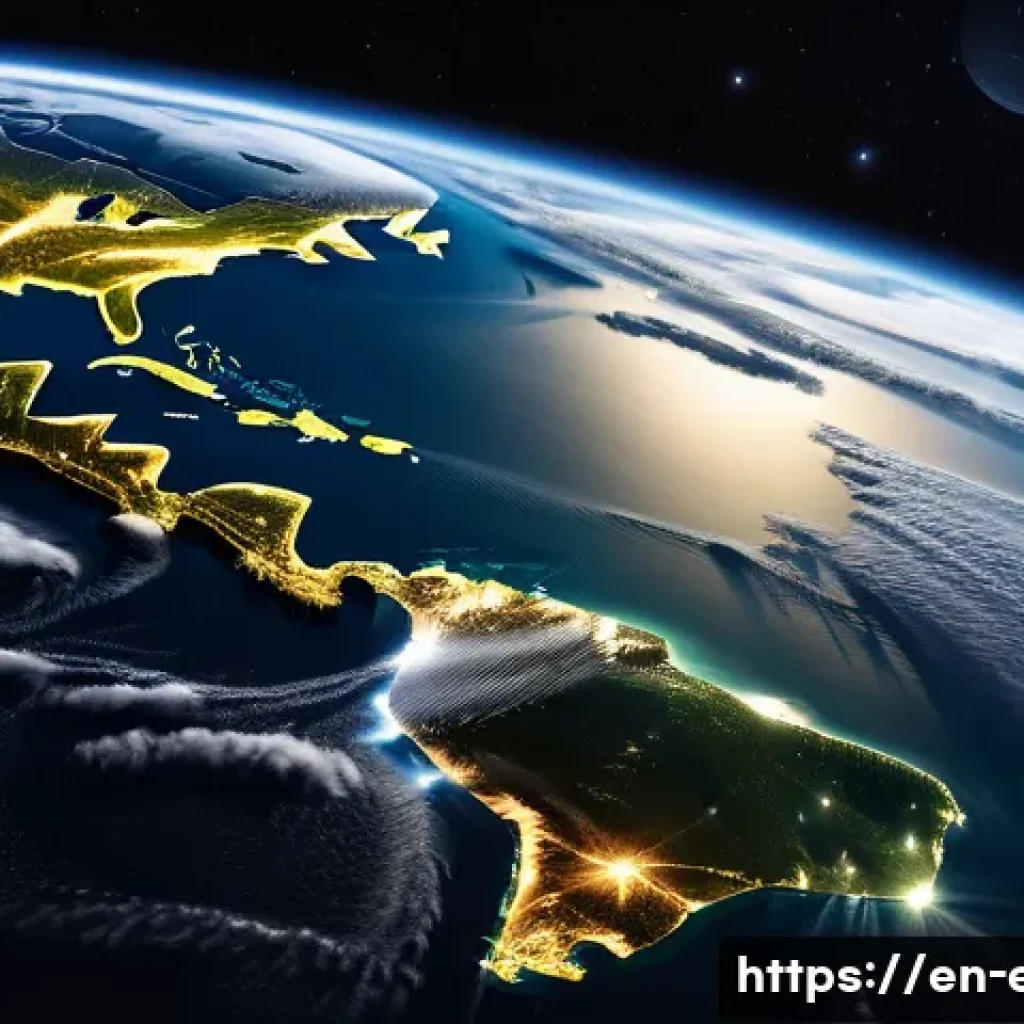
Have you ever looked up at the night sky and wondered about the silent sentinels orbiting above us, constantly gathering a wealth of information about our planet?
It’s truly mind-blowing to think about how far we’ve come, from rudimentary observations to a sophisticated network of satellites that are literally reshaping our understanding of Earth’s intricate ecosystems.
I’ve personally been fascinated by how these incredible machines provide an unparalleled view of environmental changes, from the subtle shifts in forest health to the broader impacts of climate change on our oceans.
It’s not just about pretty pictures; it’s about powerful data that helps us unravel complex ecological puzzles in ways we never thought possible. We’re talking about real-time insights into deforestation, urban sprawl, biodiversity loss, and even the health of our agricultural lands, all from space!
This technology isn’t just for scientists in labs; it’s becoming a vital tool for anyone who cares about the future of our planet, offering a perspective that ground-level observations simply can’t match.
As I’ve explored this field, I’ve seen firsthand how satellite data, when combined with sharp ecological analysis, can reveal hidden patterns and predict future environmental challenges.
It feels like we’re finally getting the full picture, and that’s genuinely exciting. I’m eager to share more about how this cutting-edge fusion of tech and nature is making a tangible difference right now and what it means for all of us moving forward.
Let’s dive deeper into this fascinating topic below.
Peeking Beyond the Horizon: How Satellites Reveal Earth’s Secrets
Honestly, it’s still wild to me how a piece of machinery orbiting hundreds of miles above us can tell us so much about what’s happening right here on the ground. When I first started diving into this, I thought it was all super high-tech and out of reach, but what I’ve learned is that these satellites are basically our planet’s eyes, constantly blinking and capturing invaluable moments. They’re not just snapping pictures; they’re measuring everything from the temperature of the oceans to the chlorophyll content in leaves. It’s like having a superpower that lets you see the pulse of Earth itself. I’ve personally found myself mesmerized by time-lapse imagery showing a glacier receding over decades or a forest slowly disappearing. These aren’t just abstract concepts anymore; the data makes it incredibly tangible, almost heartbreakingly real. It puts things into a perspective that ground-level observations simply can’t match, and that’s the magic of it for me. It’s about understanding the big picture, the interconnectedness, and the subtle shifts that add up to massive changes over time. When you see it this way, you realize how crucial this information is for making informed decisions about our future.
Unveiling Hidden Changes from Orbit
One of the coolest things about satellite imagery is its ability to reveal patterns and changes that are completely invisible to us from the ground. Think about vast stretches of rainforest or remote polar regions; we simply can’t be everywhere at once. But satellites can, and they do it consistently, day after day, year after year. This allows scientists, and even curious folks like me, to spot deforestation in areas we’d never visit, monitor the growth of urban areas encroaching on natural habitats, or track the health of coral reefs under the sea. I remember stumbling upon a visualization of water levels in a remote lake over twenty years, and the sheer decline was startling. It really hit home that these aren’t just abstract measurements; they represent real-world impacts on ecosystems and the communities that depend on them. It’s not just about seeing what’s gone, but also detecting subtle indicators of stress before they become critical. This kind of early warning system is truly invaluable.
The Toolkit in the Sky: Different Eyes, Different Views
It’s fascinating to consider that not all satellites are created equal, and they each have their own unique “superpowers.” Some are like high-resolution cameras, capturing incredibly detailed images of urban landscapes or individual trees. Others are equipped with radar, allowing them to pierce through clouds and even measure changes in the Earth’s surface down to millimeters, which is mind-boggling for tracking things like land subsidence or even tiny shifts before an earthquake. Then you have thermal sensors that can detect heat signatures, crucial for monitoring forest fires or volcanic activity. And let’s not forget multispectral and hyperspectral sensors that analyze light in various wavelengths, revealing things like plant health, water quality, or mineral composition that our human eyes could never perceive. When you combine all these different “eyes” and their distinct capabilities, you get an incredibly rich and comprehensive understanding of our planet. It’s like having a team of specialized detectives, each bringing a unique skill set to solve Earth’s biggest mysteries.
Decoding Our Planet’s Pulse: The Art of Ecological Analysis
Getting the data from space is one thing, but making sense of it, transforming those raw numbers and pixels into something meaningful for ecological understanding – that’s where the real artistry comes in. It’s not just about dumping a huge dataset onto a desk; it’s about asking the right questions, applying sophisticated models, and sometimes, honestly, a lot of trial and error. When I first started dabbling with some open-source satellite data, I felt completely overwhelmed. It looked like a jumble of colors and numbers. But once you learn the techniques, like identifying spectral signatures for different types of vegetation or tracking changes in land cover over time, it starts to tell a story. This process allows experts to monitor biodiversity, assess drought impacts, map invasive species, and even understand animal migration patterns indirectly. The journey from raw satellite image to a clear, actionable insight is complex but incredibly rewarding, knowing you’re contributing to a deeper understanding of our natural world.
Turning Raw Data into Actionable Insights
This is where the rubber meets the road. Having all this incredible data floating around up there is amazing, but if it just sits in a database, what’s the point? The real value emerges when experts, often using Geographic Information Systems (GIS) and specialized software, begin to interpret it. They can classify land use, identify areas of significant ecological change, or even quantify biomass. For example, by tracking changes in vegetation indices (like NDVI), ecologists can quickly pinpoint areas experiencing stress due to drought or disease, long before it becomes obvious to the naked eye on the ground. I’ve seen some fantastic examples of this being used by local conservation groups to prioritize where they allocate resources for habitat restoration. It takes the guesswork out of it and provides a scientific basis for decision-making. It’s about moving from “I think this area might be struggling” to “The data clearly shows this area has lost X% of its healthy vegetation over the past year,” which is a game-changer.
Predictive Power: Forecasting Tomorrow’s Challenges
One of the most exciting aspects of combining satellite data with ecological analysis is its potential for prediction. We’re not just looking backward anymore; we’re starting to glimpse what might be coming next. By analyzing historical trends captured by satellites – how often droughts occur, the rate of glacier melt, or patterns of land-use change – scientists can develop models to forecast future scenarios. This predictive capability is absolutely crucial for climate change adaptation and disaster preparedness. Imagine being able to anticipate where a forest fire is most likely to ignite based on vegetation dryness and historical fire patterns, allowing firefighters to pre-position resources. Or predicting areas most vulnerable to flooding due to changes in snowpack melt and river levels. I’ve followed projects that are using this to model the spread of certain diseases, identifying environmental factors from space that correlate with outbreaks. It feels like we’re slowly building a crystal ball for our planet, giving us a precious head start in addressing upcoming environmental challenges.
Real-World Heroes: Satellite Data in Conservation
I’ve always been a huge fan of stories where technology is used for good, and nowhere is that more evident than in conservation efforts. It’s truly inspiring to see how satellite data isn’t just for academic papers or government reports; it’s actively empowering environmentalists, NGOs, and local communities to protect our planet. From tracking illegal logging operations deep within remote forests to monitoring the health of marine protected areas, these orbiting eyes are providing indisputable evidence and a strategic advantage to those on the front lines. It’s like having an unbiased, ever-vigilant witness in the sky, documenting changes and providing the ammunition needed to advocate for stronger environmental protections. I remember watching a documentary about how indigenous communities in the Amazon are using satellite alerts to detect incursions into their territories, and it completely blew me away. It’s a powerful example of how this tech is democratizing access to critical information and leveling the playing field.
Protecting Endangered Species and Habitats
When it comes to safeguarding our most vulnerable species, habitat preservation is key, and satellite data offers an unparalleled view of these critical spaces. Researchers can map out the precise range of an endangered animal, monitor changes in forest cover that might impact their migration routes, or even track the extent of wetlands vital for migratory birds. It allows conservationists to identify “biodiversity hotspots” that require immediate protection and to assess the effectiveness of existing conservation areas. I’ve seen some incredible work where satellite data is used to identify areas of poaching activity by detecting unusual vehicle movements or changes in vegetation. This kind of remote monitoring is especially crucial in vast, inaccessible areas where ground patrols are challenging or dangerous. It’s not just about knowing where species *are*, but also understanding the health and integrity of the *spaces they call home*, giving us a fighting chance to save them.
Tackling Deforestation and Land Degradation
Deforestation and land degradation are global crises, often happening at scales that are difficult to grasp from the ground. But with satellites, we have a clear, undeniable record. Platforms like Global Forest Watch, which utilize satellite data, allow anyone to monitor forest loss and gain in near real-time. This level of transparency is revolutionary. It enables activists to call out illegal logging, helps governments enforce environmental laws, and assists sustainable agriculture initiatives by providing data on land use. I’ve personally used these tools to explore deforestation patterns in different parts of the world, and the visual evidence is incredibly impactful. It makes you realize the sheer scale of the challenge but also the power of having this information readily available. It’s a powerful tool for accountability, making it much harder for destructive practices to go unnoticed and unaddressed. It helps us hold industries and governments accountable for their environmental impact, which is a huge step forward.
The Urban Landscape Transformed: Cities from Above
We often think of satellite data primarily for natural environments, but its application to urban areas is equally transformative and, frankly, incredibly cool. Our cities are constantly evolving, expanding, and grappling with challenges like pollution, traffic, and resource management. Seeing a city from orbit gives you a whole new perspective, almost like a bird’s-eye view of its metabolism. You can track urban sprawl, measure changes in green spaces, monitor heat islands, and even assess light pollution at night. It’s not just about pretty maps; it’s about providing city planners, policymakers, and even local community groups with the robust data they need to build more sustainable, resilient, and livable cities for everyone. I’ve been really impressed by projects using this data to identify neighborhoods lacking green infrastructure or those most vulnerable to extreme heat events. This kind of information is vital for equitable urban development.
Smart Cities and Sustainable Planning
The concept of “smart cities” often conjures images of futuristic tech, and satellite data is a foundational component of making them a reality. By providing a macro-level view of urban dynamics, satellites help planners understand how a city is growing, where infrastructure is needed, and how effectively public spaces are being utilized. For instance, analyzing nighttime light imagery can indicate economic activity and population density shifts, while tracking changes in impervious surfaces (like roads and buildings) helps manage stormwater runoff and urban flooding risks. I’ve read about initiatives in places like Copenhagen and Singapore where satellite data informs decisions on everything from public transport routes to the placement of new parks. It allows for evidence-based planning that can genuinely improve the quality of life for residents, ensuring that growth is managed sustainably rather than haphazardly. It’s about building cities that are not just functional but truly thrive in harmony with their environment.
Monitoring Pollution and Resource Consumption
One of the most immediate benefits of satellite observation for urban areas is its capacity to monitor pollution and resource consumption, often in ways that ground-based sensors simply can’t replicate across an entire metropolitan area. Satellites can detect concentrations of air pollutants like nitrogen dioxide over large regions, identify sources of industrial emissions, or even track the spread of contaminated water. This information is critical for public health and environmental regulation. Furthermore, by analyzing changes in land cover and vegetation, we can infer patterns of water usage and green space health. I’ve seen compelling maps showing the correlation between industrial zones and higher pollution levels, making it undeniable and prompting action. It provides undeniable evidence that can push for policy changes and encourage industries to adopt cleaner practices. This global perspective on local issues is truly powerful, enabling cities to take targeted actions to protect their air, water, and ultimately, their residents.
| Type of Satellite Data | What It Measures/Detects | Key Ecological Applications |
|---|---|---|
| Optical Imagery (Visible/Infrared) | Light reflected from Earth’s surface; vegetation health, land cover, water bodies | Deforestation monitoring, agricultural yield assessment, urban sprawl, drought impact |
| Radar (Synthetic Aperture Radar – SAR) | Microwave signals; surface topography, ground deformation, biomass, penetrates clouds | Forest biomass estimation, flood mapping, seismic activity, ice monitoring |
| Thermal Infrared | Heat emitted from Earth’s surface | Forest fire detection, urban heat island effect, volcanic activity, sea surface temperature |
| Altimetry | Distance to Earth’s surface | Sea level rise, glacier melt, river and lake water levels |
| Lidar (Light Detection and Ranging) | Laser pulses; 3D structure of vegetation, precise terrain models | Detailed forest canopy mapping, biodiversity assessment, urban planning |
From My Laptop to the World: Accessibility and Impact
If someone had told me ten years ago that I’d be able to access and play around with real satellite data from my regular old laptop, I probably wouldn’t have believed them. But here we are! The democratization of satellite data is one of the most exciting developments in this field. It’s no longer just for NASA scientists or government agencies. Thanks to open-source platforms, user-friendly interfaces, and incredible initiatives from space agencies making their data public, anyone with an internet connection and a curious mind can explore Earth from above. This accessibility is fostering a new generation of citizen scientists, local activists, and small non-profits who are harnessing this powerful information to make a tangible difference in their own backyards and around the globe. It’s incredibly empowering to know that you don’t need a huge budget or a specialized lab to contribute to understanding our planet better.
Tools and Platforms Making Data User-Friendly

The technical barriers to using satellite data used to be incredibly high, but that’s rapidly changing. Now, there are a plethora of amazing tools and platforms that make it accessible to virtually anyone. Think of Google Earth Engine, which provides petabytes of satellite imagery and a cloud-based platform for analysis – it’s phenomenal. Then there are services like Copernicus Open Access Hub or USGS EarthExplorer, offering free access to vast archives of imagery from European and US satellites, respectively. These platforms often come with intuitive interfaces and even tutorials that guide you through basic analyses. I’ve spent hours exploring these resources, and it’s truly addictive once you get the hang of it. They handle the heavy lifting of processing massive datasets, allowing you to focus on the ecological questions you want to answer. This shift from needing supercomputers to being able to run complex analyses in a web browser is a monumental leap forward.
Empowering Citizen Scientists and Local Initiatives
This newfound accessibility isn’t just a technical convenience; it’s a social revolution. It means that local conservation groups can track changes in their wetlands, community activists can monitor pollution near their homes, and even high school students can conduct meaningful research projects using real-world data. I’ve seen some fantastic examples of citizen science projects where volunteers use satellite imagery to identify illegal mining operations or map out areas affected by natural disasters, providing crucial information to emergency responders. This kind of grassroots involvement adds countless “eyes on the ground” (or rather, “eyes from above” interpreted by those on the ground) and significantly amplifies our collective ability to monitor and protect the environment. It empowers individuals and small groups to become active participants in environmental stewardship, transforming them from passive observers into agents of change. It’s a testament to how technology, when made available, can truly galvanize collective action for the common good.
The Future is Bright (and Monitored): Innovations on the Horizon
Just when you think satellite technology couldn’t get any cooler, something new comes along to completely blow your mind. The field of Earth observation is constantly evolving, with innovations coming at us at a dizzying pace. We’re talking about advancements in sensor technology that offer even higher resolutions and more spectral bands, allowing us to see details we never thought possible. Then there’s the incredible progress in data processing, leveraging artificial intelligence and machine learning to extract insights faster and more accurately than ever before. It feels like we’re just scratching the surface of what’s achievable, and the possibilities for environmental monitoring, climate research, and sustainable development are truly boundless. I’m genuinely excited to see how these future innovations will further refine our understanding of Earth’s intricate systems and empower us to respond more effectively to the challenges we face.
AI and Machine Learning: Supercharging Analysis
This is where things get really futuristic, but in the best possible way. Traditionally, analyzing vast amounts of satellite data could be a painstaking, manual process. But enter Artificial Intelligence and Machine Learning, and suddenly, the game changes entirely. AI algorithms can be trained to automatically identify patterns, classify land cover, detect changes, and even predict events with incredible speed and accuracy. Imagine an AI sifting through years of imagery to pinpoint every instance of illegal deforestation, or an algorithm that can immediately flag anomalies that might indicate an impending natural disaster. I’ve been experimenting with some entry-level AI tools for image recognition, and the potential is astounding. This doesn’t just make the analysis faster; it also reduces human error, allows for the processing of truly enormous datasets, and helps us uncover subtle trends that might otherwise go unnoticed. It’s like giving our planet’s “eyes” a super-powered brain, making them even more effective guardians.
Smaller Satellites, Bigger Impact: The Cubesat Revolution
Remember when satellites were these massive, incredibly expensive behemoths? Well, get ready for the “Cubesat revolution”! These tiny, often shoebox-sized satellites are transforming the industry. Because they’re smaller and cheaper to build and launch, we can now send entire constellations of them into orbit, providing unprecedented coverage and revisit times – meaning they can image the same spot on Earth much more frequently. This allows for near real-time monitoring of rapid changes, which is a huge advantage for things like disaster response, tracking dynamic weather patterns, or even monitoring crop health on a daily basis. I’ve followed companies that are launching hundreds of these small satellites, creating a truly global, constantly updated view of our planet. It’s making space-based data more affordable and accessible, fostering innovation, and ultimately giving us a more dynamic and timely understanding of our ever-changing world. This shift is democratizing access to space in a way that felt unimaginable just a few years ago.
Concluding Thoughts
Whew! What a journey we’ve been on, exploring the incredible power of satellites. Honestly, thinking about these silent sentinels orbiting high above us, constantly feeding us invaluable insights about our home planet, still gives me goosebumps. It’s not just abstract science anymore; it’s a tangible, real-time connection to the heartbeat of Earth, enabling us to see things we never could from our humble ground-level perspective. My hope is that this deep dive has sparked a bit of that same wonder in you, maybe even inspiring you to peek into some of the open-source platforms yourself. Understanding our world, its challenges, and its breathtaking beauty, truly begins with seeing it through every possible lens, and these eyes in the sky are undoubtedly some of the most powerful we possess. It’s truly a testament to human ingenuity, and I feel more connected to our planet’s story having explored these perspectives.
Beyond the Lens: Practical Insights
There’s so much to learn and explore when it comes comes to Earth observation. If you’re anything like me, your curiosity is probably buzzing right now! Here are a few practical nuggets I’ve picked up that you might find super useful as you delve deeper:
1. Dive into Open-Source Data: Don’t be shy! Platforms like Google Earth Engine, NASA’s Earthdata, or the Copernicus Open Access Hub offer tons of free satellite imagery and tools. It’s a fantastic way to start playing around and visualizing data for yourself. You don’t need a PhD; just a curious mind!
2. Understand the “Eyes”: Remember that different satellites “see” differently. Optical imagery is great for visual details, radar can pierce clouds, and thermal sensors detect heat. Knowing which type of data suits your question makes your search much more efficient and meaningful.
3. Think Local, Act Global: Even if you’re interested in changes in your local park, global satellite data can provide the broader context. How does your local deforestation compare to regional or global trends? These larger perspectives are often just a few clicks away.
4. Citizen Science is Power: Many projects encourage citizen scientists to help analyze satellite imagery for things like disaster assessment or conservation. This is a brilliant way to contribute to real-world research and make a tangible difference from your own computer.
5. Connect the Dots: Satellite data isn’t just for scientists. It informs everything from city planning and agricultural efficiency to disaster relief and climate change policies. Always think about how the data you’re looking at impacts real people and real decisions on the ground.
Key Takeaways from Orbit
To wrap things up, the sheer utility and growing accessibility of satellite data are simply game-changers for understanding and protecting our planet. My experience diving into this field has consistently reinforced that these orbital sentinels aren’t just high-tech gadgets; they are our most impartial witnesses, silently documenting every shift and change across Earth’s surface. They provide us with undeniable evidence for environmental challenges like deforestation and climate change, empower conservation efforts on an unprecedented scale, and offer crucial insights for building more resilient, sustainable urban environments. What truly excites me is how accessible this once-exclusive technology has become, allowing everyday citizens and local groups to become active participants in Earth stewardship. The future, supercharged by AI and the rise of smaller, more nimble satellites, promises an even clearer, more dynamic view of our world, offering hope and powerful tools for addressing the complex challenges that lie ahead. It’s a journey of continuous discovery, and I genuinely believe the best is yet to come in how we harness this incredible resource.
Frequently Asked Questions (FAQ) 📖
Q: What specific types of environmental changes can satellites actually see from space?
A: Oh, this is where it gets really exciting! When I first started diving into this, I was amazed by the sheer detail satellites can pick up. Beyond just pretty pictures, they’re like our ultimate eyes in the sky, constantly monitoring everything from the subtle health of a remote forest to the vast, swirling movements of ocean currents.
For instance, they track deforestation and reforestation efforts with incredible precision, showing us exactly where trees are being lost or gained, sometimes even in real-time.
I’ve personally seen how this data has exposed illegal logging in areas that would be absolutely impossible to monitor from the ground. They also keep a close watch on our precious oceans, identifying harmful algal blooms, tracking critical sea-level rise, and even measuring ocean temperatures, which are all vital indicators of our planet’s changing climate.
And it’s not just the big, dramatic stuff; they meticulously map urban sprawl, analyze changes in agricultural land use, and even help us understand the spread of invasive species that threaten native ecosystems.
It’s truly comprehensive, offering a constantly updated snapshot of our planet’s delicate pulse.
Q: How does this satellite data practically help us protect our planet on a day-to-day basis?
A: This is the million-dollar question, right? It’s one thing to see the data, but what does it do for us? Well, from my perspective, it’s nothing short of a game-changer for practically everyone involved in environmental protection and sustainable living.
Governments use it to enforce environmental laws more effectively and to plan sustainable urban development, making sure that new infrastructure projects aren’t inadvertently harming critical ecosystems.
Conservation organizations leverage this powerful data to identify biodiversity hotspots that need urgent protection or to monitor the tangible success of their rewilding projects.
Farmers are even using it to optimize their irrigation and fertilization, leading to more efficient, eco-friendly agricultural practices that reduce waste.
And when disasters sadly strike, like devastating wildfires or widespread floods, satellites provide crucial real-time information that helps emergency responders direct aid more effectively and assess the damage much faster.
I’ve personally been so inspired seeing how communities can use this information to make smarter, more sustainable choices about their land and precious resources.
It truly transforms abstract scientific concepts into actionable, impactful steps for a healthier planet.
Q: Is this amazing satellite technology only for scientists, or can everyday people access and understand this kind of information?
A: Absolutely not just for scientists! While the underlying technology is incredibly complex and mind-bogglingly advanced, the real beauty of it is how accessible so much of the data has become for everyone.
Believe me, you definitely don’t need a PhD in remote sensing to get a lot of value and insight out of it. Many government agencies, like NASA and the European Space Agency (ESA), have fantastic, publicly available portals where you can explore incredible satellite images and datasets for free.
There are also fantastic, user-friendly platforms like Google Earth Engine, which, while incredibly powerful, offers intuitive tools and tutorials for pretty much anyone interested in digging deeper into environmental trends.
Even a growing number of educational initiatives and exciting citizen science projects are popping up, making it easier than ever for the average person to engage with and even contribute to our collective understanding of our planet through satellite data.
I’ve always felt that empowering more people with this kind of vital information is key to building a stronger, collective sense of responsibility for Earth.
It’s truly for anyone who shares a passion for our planet and genuinely wants to be a part of the solution!